



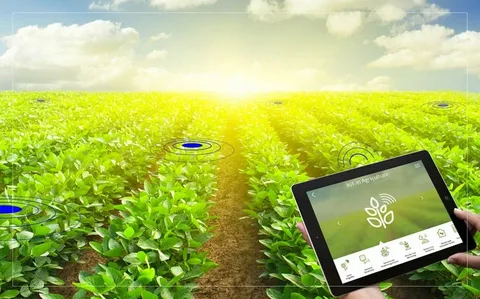
Agriculture has always been a cornerstone of human civilization, providing the essential resources for food, clothing, and more. However, in today’s rapidly changing world, traditional farming methods are struggling to meet the demands of a growing global population, environmental challenges, and climate change. This is where big data and smart agriculture come into play, offering transformative solutions to optimize farm productivity. By harnessing large-scale data analytics, farmers can improve crop yields, reduce waste, and enhance sustainability.
In this article, we will explore the role of big data in optimizing farm productivity through smart agriculture and discuss how this technological advancement is revolutionizing farming practices worldwide.
What is Smart Agriculture?
Smart agriculture refers to the use of advanced technologies like sensors, drones, Internet of Things (IoT), and data analytics to monitor and manage farming operations. These technologies enable real-time data collection and decision-making, which help farmers optimize their practices in terms of planting, irrigation, pest management, and harvesting. At the heart of smart agriculture is big data, which plays a vital role in making informed decisions based on vast amounts of information gathered from various sources.
The Power of Big Data in Agriculture
1. Real-Time Monitoring of Farm Conditions
Big data allows farmers to gather real-time data from various sources, such as soil moisture sensors, weather forecasts, satellite images, and drones. This data is crucial for monitoring soil health, weather patterns, and crop growth. By analyzing this data, farmers can detect issues like nutrient deficiencies, irrigation needs, or pest infestations early on, allowing them to take immediate action and reduce crop loss.
For example, using weather data from big data analytics, farmers can predict the optimal time for planting and harvesting, ensuring that crops grow under ideal conditions. By staying ahead of potential issues, farmers can mitigate risks and maximize productivity.
2. Precision Farming
Big data also supports precision farming techniques, which aim to optimize the use of resources like water, fertilizers, and pesticides. Instead of applying these inputs uniformly across an entire field, farmers can use data to apply them precisely where and when they are needed. This reduces waste, lowers costs, and minimizes the environmental impact of farming practices.
For example, through GPS and sensor technology, farmers can map soil nutrient levels across different zones of a field and apply fertilizers only where needed. This ensures that crops get the right amount of nutrients without over-fertilizing, which can lead to pollution and inefficiency.
3. Crop Yield Prediction
One of the most significant advantages of big data in agriculture is its ability to predict crop yields with high accuracy. By analyzing historical data, weather patterns, soil conditions, and other factors, farmers can forecast how much produce they will harvest. These predictions help in planning resources, labor, and logistics more effectively.
For instance, big data tools can predict how much water a particular crop will need during different growth stages, thus helping farmers manage their irrigation systems more efficiently. In turn, this leads to higher crop yields and a more sustainable farming operation.
Benefits of Big Data in Optimizing Farm Productivity
1. Improved Resource Management
By utilizing big data, farmers can optimize their resource management, ensuring that they use water, fertilizers, and pesticides more efficiently. This leads to cost savings, reduces environmental impact, and promotes sustainable farming practices.
2. Increased Crop Yields
Big data’s ability to provide insights into weather, soil conditions, and crop health allows farmers to make more informed decisions, leading to improved crop yields. With better predictions of when and how to plant and harvest, farmers can achieve better productivity with fewer resources.
3. Cost Efficiency
Smart agriculture powered by big data can help reduce input costs by optimizing the use of fertilizers, pesticides, and water. By ensuring that these inputs are used only when necessary, farmers can reduce waste and lower operational costs. Additionally, precision farming techniques minimize the need for expensive equipment and labor.
4. Sustainable Practices
Big data enables farmers to adopt more sustainable practices by reducing waste, conserving resources, and minimizing the environmental footprint of farming operations. For instance, data-driven decisions about water usage can help conserve water resources, while precise application of fertilizers can reduce soil degradation and water contamination.
Challenges in Implementing Big Data in Agriculture
While the benefits of big data in optimizing farm productivity through smart agriculture are clear, there are several challenges that need to be addressed:
- Data Privacy and Security: With the increasing amount of data being collected, ensuring data privacy and security becomes crucial, especially for smallholder farmers.
- High Initial Investment: Implementing smart agriculture solutions can require significant upfront investment in sensors, software, and training.
- Data Interpretation: Not all farmers have the skills or resources to interpret the data accurately. Proper training and support are needed to ensure that the data is used effectively.
- Infrastructure Limitations: In some rural areas, internet connectivity and infrastructure may not be sufficient to support big data applications.
Conclusion
The role of big data in optimizing farm productivity through smart agriculture cannot be overstated. By enabling real-time monitoring, precision farming, and accurate crop yield predictions, big data empowers farmers to make better decisions, reduce costs, and improve sustainability. As the agricultural industry continues to evolve, the integration of big data will play a crucial role in feeding the world’s growing population while preserving the planet’s resources.