



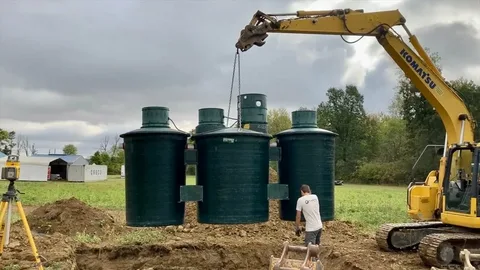
Commencing the Journey: An Introduction to Septic Systems
In exploringthe intricacies of human civilization, one often stumbles upon the mundane yet fundamental systems that enable our daily lives to run smoothly. One such system is the traditional septic system, a silent workhorse that has served us diligently.
Comprised of a septic tank and drainage field, this system performs the crucial role of treating wastewater from homes not connected to a municipal sewer line. The septic tank separates solid wastes which then decompose, while liquids eventually drain into a leach field.
Simple and self-sustaining, these systems have been in use for more than a century. However, as they rely on gravity and natural processes for decomposition and treatment, they are not without their limitations.
The speed at which wastes break down is often slow and variable based on factors such as temperature or waste composition. Additionally, traditional septic systems do not adequately treat some pathogens or nutrients before releasing effluent into the environment.
The Quest for Efficiency: Upgrading Our Wastewater Warriors
With global populations continually growing and urbanizing at an unprecedented rate, our dependence on these unsung heroes is increasing exponentially. Yet concurrently, so too does their impact on our environment – especially when their function is compromised due to overuse or poor maintenance. Poorly treated wastewater can percolate into groundwater sources causing contamination; release harmful gases like methane—a potent greenhouse gas—into the atmosphere; or cause unsightly surface runoff.
Therefore it has become imperative to explore more efficient septic systems—ones that are capable of handling larger volumes of waste quicker; that treat waste more thoroughly reducing environmental impacts; and are easier to maintain reducing failure rates. In short, we need modernized wastewater warriors who can tackle today’s challenges head-on.
A Glimpse into Tomorrow: New Technologies in Septic Systems
The future of septic systems, however, is not all doom and gloom. In fact, it’s rather exciting. Emerging from the shadows of the traditional septic system are its advanced, tech-savvy successors—equipped with the latest in wastewater treatment technology.
Advanced Treatment Units (ATUs) leap ahead with aerobic treatment processes, essentially turbo-charging waste decomposition. Membrane Bioreactor Technology (MBR) pushes boundaries in micro-filtration effectively removing harmful bacteria and viruses.
Biofilters & Peat Filters offer natural filtering solutions enhancing environmental sustainability while Constructed Wetland Systems mimic nature’s own water purification process. Technological advancements have also seeped into peripheral areas like pumps and monitoring systems with energy-efficient pump technologies promising lower operational costs and the integration of Internet of Things (IoT) enhancing real-time monitoring and maintenance capabilities.
As we venture further into this article, we will delve deeper into each of these fascinating technologies—understanding their principles, applications in septic systems, as well as benefits and potential limitations. These innovative approaches to wastewater management signify a promising stride towards efficient sanitation solutions that can keep pace with our rapidly evolving world.
Understanding the Basics of Septic System Efficiency
The Influence of Size, Design, Installation, and Maintenance on Efficiency
An ecological equilibrium permeates our daily lives. Even the seemingly mundane task of waste management, more precisely septic system efficiency, is influenced by a myriad of factors. The first among these factors is size.
An undersized septic system for a large household or commercial establishment can lead to premature failure and contamination due to insufficient treatment time. Conversely, an oversized system results in financial inefficiencies and subpar operation due to reduced bacterial activity.
The design is another decisive factor when it comes to system efficiency. Effective designs facilitate optimal liquid flow while preventing solids from entering the drain field—both are prerequisites for efficient functioning.
Details such as tank shape, compartmentalization within the tank, and pipe layout all contribute to a well-designed system that minimizes solid build-up and maximizes waste breakdown. Last but not least in this triad are installation and maintenance practices.
Properly installed systems with level tanks and trenches ensure consistent operation without undue stress on any single part. Regular maintenance activities like pump-outs prevent accumulation of scum and sludge layers that impede operational efficiency over time.
Unmasking the Environmental Impact of Inefficient Systems
An inefficient septic system spells more than just personal inconvenience; it portends significant environmental impact as well. Inefficiency often leads to overflow or leakage which contaminates surrounding soil with untreated wastewater—a toxic brew teeming with pathogens harmful to both terrestrial and aquatic life-forms. The insidious nature of soil contamination means its effects are typically widespread before they’re even detected—contaminated groundwater often finds its way into rivers or lakes causing large-scale damage to ecosystems therein.
Furthermore, nutrients like nitrogen and phosphorous released into water bodies promote excessive algae growth which leads to dead zones devoid of dissolved oxygen, a condition termed eutrophication. The environmental burden isn’t limited to soil and water contamination.
The production of harmful greenhouse gases like methane and carbon dioxide is an often overlooked byproduct of inefficient septic systems. These potent gases contribute to global warming, an environmental crisis with far-reaching implications for all life on earth.
Technology: Spearheading the Quest for Efficiency
Enter technology—the harbinger of efficiency in this crucial sector. Advanced Treatment Units (ATUs) mimic natural processes to break down waste more effectively, while Membrane Bioreactor Technologies leverage physical barriers for superior solid-liquid separation. Biofilters introduce beneficial bacteria directly into wastewater, accelerating decomposition and minimizing odors concurrently.
Not just that, but we also see the burgeoning use of smart technologies in septic systems. Sensors monitor system performance in real-time, alerting homeowners to potential issues before they become expensive repairs or replacements.
IoT (Internet of Things) integration takes it a step further by allowing remote monitoring and control—optimization at your fingertips. These technological advancements are not only improving efficiency but are also contributing significantly towards environmental protection efforts—reducing contamination risks while cutting greenhouse emissions from the sector by substantial margins.
Advanced Treatment Units (ATUs): Modern Innovations in Septic Processing
Overview and Functioning of ATUs
Advanced Treatment Units (ATUs) represent an innovative leap in septic system technology. Unlike traditional septic units, which merely separate solids from liquids and allow for bacterial decomposition, ATUs go a step further to filter out additional impurities.
The process involves a sequence of different stages: pre-treatment, aeration, clarification, disinfection and finally, discharge. The pre-treatment stage collects the wastewater where larger solids are allowed to settle.
This partially clarified liquid then proceeds to the next stage – aeration – where it is thoroughly mixed with oxygen-rich air. The oxygen invigorates the growth of aerobic bacteria that consume organic matter within the wastewater.
In the clarification stage, these bacteria along with any remaining solids form a sludge that settles at the bottom while clearer water rises to the top. Following this is the disinfection phase which employs methods such as chlorination or UV treatment to eradicate potential pathogens before final discharge into designated absorption areas.
Types of ATUs: Aerobic Treatment Units, Trickling Filter Units, Rotating Biological Contactors
Diversity in Design: Different Forms of Advanced Treatment Units There are three main types of ATUs that vary based on their internal functioning: Aerobic Treatment Units (ATU), Trickling Filter Units (TFU), and Rotating Biological Contactors (RBC). Aerobic Treatment Units mirror nature’s way of breaking down waste materials by boosting growth of oxygen-loving bacteria that decompose organic matter more effectively than their anaerobic counterparts found in traditional septic tanks.
Trickling Filter Units consist of an arrayed bed made up typically of high surface area materials such as plastic or gravel over which wastewater is distributed evenly. The microbial communities attached to the bed surface break down the organic matter as the wastewater trickles down.
Rotating Biological Contactors, on the other hand, feature a series of closely spaced circular discs, partially submerged in wastewater. As these discs rotate, they encourage growth of microbes which consume organic waste as they come into contact with the wastewater.
Benefits and Limitations
The Trade-off: Advantages and Potential Drawbacks ATUs provide clear advantages over traditional septic systems that could revolutionize wastewater treatment process.
They offer improved waste breakdown due to enhanced aeration fostering healthier bacteria colonies. This results in significantly cleaner end-product than conventional septic systems, reducing potential for ground water contamination.
Furthermore, ATUs are typically compact units, making them suitable for smaller plots where traditional septic system installation isn’t feasible. However, ATUs entail their own set of limitations.
These systems are highly sophisticated requiring regular maintenance and inspections to ensure optimal functioning. Additionally, they are more energy-intensive than standard septic tanks due to their mechanical parts and processes which could raise sustainability concerns over long-term use.
Membrane Bioreactor Technology (MBR): A Quantum Leap in Septic Systems
The Science Behind Membrane Bioreactor Technology
Membrane Bioreactor Technology (MBR) is an innovative development in wastewater treatment that combines the traditional activated sludge process with ultrafiltration membranes. The crux of this technology lies in the deployment of a semi-permeable membrane, acting as both a filter and a barrier. This ingenious combination allows for the facilitation of microbial degradation as well as suspended solid removal, resulting in high-quality effluent suitable for reuse.
Compared to conventional processes, MBRs offer numerous advantages such as significant footprint reduction and excellent pathogen removal efficiency. Furthermore, they have the potential to handle higher organic loading rates without compromising effluent quality, making them an ideal solution for densely populated areas where land availability is limited.
Application of MBRs in Septic Systems
The application of MBR technology in septic systems revolves around its ability to both physically and biologically treat wastewater simultaneously within one enclosed system. This process benefits residential septic systems by reducing tank size but enhancing pollutant-removing capacity.
In practical terms, MBRs can be retrofitted into existing septic tanks or implemented during new installations. The process involves direct filtration where sludge (activated sludge or biomass) is circulated over the membrane surface providing more efficient treatment than traditional methods.
Advantages and Disadvantages
MBR technology’s advantages are manifold: compact design, high effluent quality leading to potential water recycling opportunities, lower sludge production, and compliance with increasingly stricter environmental regulations. Nevertheless, like any technology it has its own set of limitations: higher operational costs due to energy consumption associated with pumping and membrane cleaning; need for specialized maintenance; sensitivity to certain chemicals; and susceptibility to membrane fouling which can affect the system’s overall performance.
Biofilters & Peat Filters: Nature-Inspired Solutions
Understanding Biofilter Technology
Biofilter technology capitalizes on natural processes to treat wastewater. It is essentially a percolation process, where wastewater flows through a filter medium populated by microorganisms. These microorganisms feed on the organic matter in the wastewater, thus treating it and producing clean effluent.
Commonly used filter mediums include sand, gravel, peat moss or other organic materials. Air circulates freely in these biofilters enabling aerobic bacteria to thrive and breakdown waste more efficiently than anaerobic bacteria found in traditional septic systems.
The Role of Peat Filters
Peat filters are a specific type of biofilter which use sphagnum peat moss as their filter medium. The spongy texture and high cation exchange capacity of peat moss make it an excellent material for wastewater treatment — it effectively traps solids, absorbs pollutants like phosphorous and nitrogen while promoting biological activity that breaks down organic matter.
When properly maintained, peat filters can produce highly treated effluent that exceeds the performance of conventional systems. A significant advantage is their ability to function effectively even under cold weather conditions where other biofilter mediums may falter.
Prospects and Challenges
While biofilters offer a sustainable alternative to traditional septic systems with their simplicity, effectiveness and low energy requirements; they also present certain challenges. These include potential overloading if household water usage increases; requirement for periodic replacements of the filter medium; sensitivity to toxic substances that can harm beneficial bacteria; and need for careful design considerations including appropriate sizing for anticipated flow rates.
Constructed Wetland Systems: Harnessing Nature’s Ingenuity
Anatomy of Constructed Wetland Systems
Constructed wetland systems are engineered systems that mimic natural wetlands, a nature’s own wastewater treatment plant. They consist of a shallow basin filled with a suitable medium, often gravel or sand, and planted with aquatic vegetation.
Wastewater trickles through the medium where it undergoes physical, chemical and biological processes that break down contaminants. The plants play an essential role by absorbing nutrients like nitrogen and phosphorous (which otherwise would contribute to water pollution) and creating aerobic conditions conducive to microbial activity.
The Role in Wastewater Treatment
Constructed wetland systems serve as a tertiary treatment method supplementing traditional septic system components. After primary treatment in the septic tank where solids settle down and secondary treatment in the drain field where effluent is dispersed for further percolation; effluent may still contain residual nutrients or pathogens. This is where constructed wetlands come into picture: they provide an additional layer of purification before the treated water is returned to the environment.
Environmental Benefits & Sustainability Aspects
Constructed wetland systems stand out for their environmental friendliness and sustainability. They represent a low-tech, low-cost solution requiring minimal maintenance while delivering high performance – attributes particularly valuable for developing regions or rural areas lacking advanced infrastructure.
Moreover, they enhance local biodiversity by creating habitat for various species of birds, insects, amphibians and more. Nonetheless, careful design considerations are needed to manage potential challenges such as potential odors or attraction of unwanted wildlife; reliance on suitable climate conditions; land space requirements; variable performance based on influent quality; and regulatory approval complexities due to their relatively novel status in many regions.
Energy-Efficient Pump Technologies: Powering Progress Sustainably
The Importance of Pump Efficiency in Septic Systems
Pumps are indispensable components within septic systems – they transport wastewater from one stage to the next, ensuring it undergoes the necessary treatment processes. As such, pump efficiency directly impacts overall system performance and energy consumption.
A well-designed, efficient pump can optimize system operations by minimizing energy use and reducing operational costs. Conversely, an inefficient or improperly sized pump can lead to frequent breakdowns or even system failure, leading to costly repair or replacement.
Innovative Pump Designs & Their Impact on System Efficiency
Recent advancements in pump technology have led to the development of more efficient designs. These include pumps with variable speed drives that adjust pumping speed based on flow requirements; high-efficiency motors that consume less energy; and smart controls that optimize operations based on real-time conditions.
Implementing these technologies in septic systems can significantly improve their efficiency while reducing both operation costs and environmental impact. However, initial investment costs may be higher compared to traditional pumps – an aspect that may deter some homeowners despite long-term advantages.
Smart Monitoring Systems & IoT Integration: A Connected Future
The Role of Sensors and Remote Monitoring Tools
Sensors are increasingly being used to monitor key parameters within septic systems – such as tank level, pH value, temperature, or biological oxygen demand (BOD) — providing valuable data on system health. Coupled with remote monitoring tools like web-based dashboards or mobile apps; homeowners can easily track system performance in real time from any location. This enables proactive maintenance: potential issues can be addressed before they escalate into serious problems thereby prolonging system lifespan and avoiding costly emergencies.
IoT Applications for Real-time Data Collection & Analysis
The Internet of Things (IoT) is revolutionizing wastewater management by integrating various components into a connected network. This allows for seamless communication between devices leading to improved data accuracy and timeliness which substantially enhances operational efficiency. In context of septic systems, IoT has vast potential: sensors can be connected to cloud-based platforms where data is stored, analyzed and used to generate insights; system controllers can be programmed for automatic adjustments based on sensor outputs; service providers can remotely monitor multiple systems and schedule maintenance or repairs as needed.
Impact on Maintenance Schedules & Long-term System Health
The integration of smart monitoring systems and IoT in septic systems paves the way for predictive maintenance – a paradigm shift from traditional reactive models. By continuously analyzing system data, potential malfunctions can be predicted enabling preemptive actions which save costs, prevent disruptions and enhance overall system longevity and reliability. Despite the clear benefits, adoption of these technologies also presents challenges such as higher upfront costs; need for reliable internet connectivity; concerns over data privacy & security; or simply reluctance to adapt to new technologies among some user groups.
Regulatory Considerations & Future Trends: Towards Sustainable Septic Management
Navigating Current Regulations
As septic system technologies evolve, so too do regulations. These are intended to ensure that new installations or modifications meet certain standards aimed at protecting public health and environment. However, navigating these regulations can be complex given their variability across different jurisdictions.
Consequently, homeowners considering system upgrades must consult local health departments or environmental agencies for accurate information on applicable requirements. Despite the regulatory complexities, the overarching emphasis is clear: promoting sustainable wastewater treatment practices that balance efficiency with environmental protection — a goal that innovative technologies are well-positioned to achieve.
Conclusion: Optimism in Innovation
Navigating through the labyrinthine world of septic system technologies may seem daunting initially— but there’s cause for optimism. Each technological development represents a step towards more efficient wastewater treatment methods — reducing environmental impact while enhancing our quality of life.
The challenge lies in embracing these innovations despite initial hurdles and investing effort towards understanding them — much like writing an article or reading through this one. The future of septic systems is indeed bright and getting brighter with every technological advancement.
