



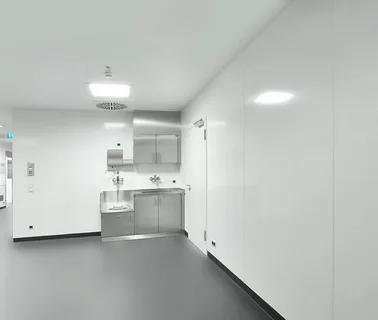
Steel and PVC cladding sheets provide versatile wall protection solutions for environments where durability, hygiene, and easy maintenance are essential. Used across commercial kitchens, healthcare facilities, industrial spaces, retail environments, and domestic interiors, these cladding systems offer practical alternatives to traditional wall finishes such as paint, plaster, or tiles.
While PVC cladding sheets are known for their lightweight construction and moisture resistance, steel cladding sheets provide enhanced durability, heat resistance, and heavy-duty protection. Together, they offer solutions for a wide range of commercial and domestic applications.
What Are Steel and PVC Cladding Sheets?
Steel and PVC cladding sheets are protective wall panels designed to be fixed directly onto walls or ceilings to create durable, easy-to-clean surfaces.
PVC cladding sheets are manufactured from rigid polyvinyl chloride (PVC), a lightweight and moisture-resistant plastic material. These panels are commonly used in hygienic environments because they are smooth, non-porous, and simple to maintain.
Steel cladding sheets, typically manufactured from stainless steel, provide a stronger and more heat-resistant wall protection solution suitable for heavy-duty commercial and industrial applications.
Both systems are installed using compatible trims, adhesives, and sealants to create a complete and professional wall cladding installation.
Key Benefits of PVC Cladding Sheets
One of the biggest advantages of PVC cladding sheets is their hygienic performance. The smooth surface allows dirt, grease, and moisture to be cleaned away quickly, helping maintain high standards of cleanliness.
PVC cladding is also highly moisture-resistant, making it suitable for kitchens, bathrooms, washrooms, and food preparation areas.
The lightweight nature of PVC sheets simplifies handling and installation, helping reduce labour time and project costs.
PVC wall cladding is also available in a wide range of colours, thicknesses, and finishes, allowing customers to choose systems that suit both practical and decorative requirements.
Key Benefits of Steel Cladding Sheets
Steel cladding sheets offer superior durability and impact resistance compared to PVC alternatives. Stainless steel wall panels are highly resistant to scratches, heat, moisture, and heavy daily use, making them ideal for demanding commercial environments.
Hygiene is another major benefit. Stainless steel provides a smooth, non-porous surface that supports easy cleaning and helps maintain hygiene compliance in food preparation and healthcare environments.
Steel cladding also creates a sleek and professional appearance that suits modern commercial interiors and industrial spaces.
Common Applications for PVC Cladding
PVC cladding sheets are widely used in commercial kitchens, food preparation areas, healthcare facilities, bathrooms, utility rooms, and domestic kitchens.
Their easy-clean and moisture-resistant properties make them ideal for environments exposed to steam, splashes, humidity, and regular cleaning.
Budget PVC cladding systems are often used in refurbishment projects and low-impact areas, while heavy-duty PVC panels are suitable for busier commercial environments.
Common Applications for Steel Cladding
Steel cladding sheets are commonly installed in commercial kitchens, food production facilities, healthcare environments, laboratories, warehouses, and industrial workspaces.
They are particularly suitable for areas exposed to high heat, heavy impacts, intensive cleaning, or corrosive environments where long-term durability is essential.
Brushed stainless steel sheets are also increasingly used in modern retail, hospitality, and architectural interiors for decorative wall finishes.
Installation and Finishing Components
Both steel and PVC cladding sheets are typically installed onto prepared walls using specialist adhesives or mechanical fixings.
Trims and profiles are used around corners, edges, and joins to create a clean and professional finish while maintaining hygiene standards. Silicone sealants may also be applied to ensure watertight joints and prevent moisture ingress.
PVC cladding systems are generally easier and faster to install due to their lightweight construction, while steel panels may require more precise fitting and handling.
Maintenance and Long-Term Performance
Both PVC and steel cladding systems are designed for low maintenance and long-term durability.
PVC cladding panels resist moisture, mould, and staining, helping maintain appearance with minimal upkeep.
Steel cladding sheets offer exceptional resistance to heat, impact, corrosion, and cleaning chemicals, making them highly durable even in demanding environments.
Regular cleaning with appropriate products helps maintain both hygiene and appearance across both systems.
Choosing Between Steel and PVC Cladding Sheets
The choice between steel and PVC cladding sheets depends on the intended application and environment.
PVC cladding is often the preferred solution for cost-effective hygienic wall protection in kitchens, bathrooms, and general commercial spaces.
Steel cladding is better suited to environments requiring maximum durability, heat resistance, or heavy-duty wall protection.
Many commercial projects combine both systems, using PVC panels for general wall areas and stainless steel sheets in high-risk or high-impact zones.
A Versatile Wall Protection Solution
Steel and PVC cladding sheets provide practical, durable, and hygienic wall solutions for a wide range of commercial, industrial, and domestic environments. Their ability to improve wall protection while simplifying maintenance makes them an effective alternative to traditional wall finishes.
Whether using lightweight PVC wall panels or heavy-duty stainless steel sheets, modern cladding systems help create cleaner, safer, and more professional spaces built for long-term performance.