



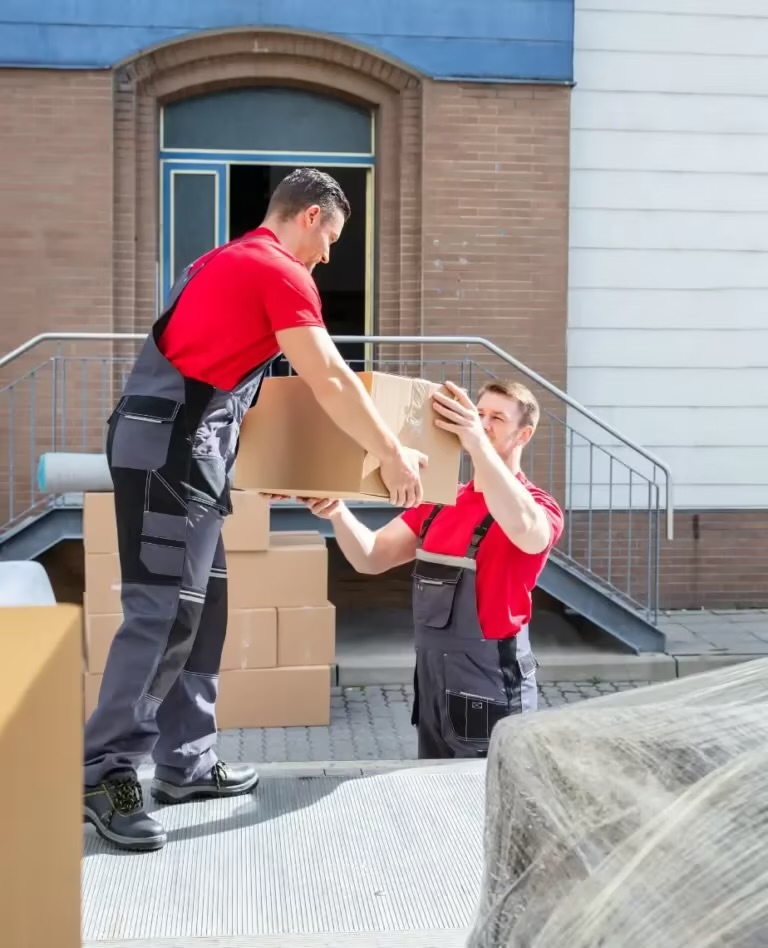
Office furniture disposal is one of the most overlooked aspects of commercial clearance in Glasgow, particularly when businesses are relocating, refurbishing their premises or undertaking a complete office clearance. While the removal of unwanted desks, chairs, filing cabinets and meeting tables may appear straightforward, the decisions surrounding their disposal can have significant financial, environmental and practical consequences. For companies managing large quantities of redundant furniture, the challenge extends beyond simply arranging collection, because items that are no longer suitable for one workplace may retain considerable value elsewhere, while others require careful separation and appropriate waste management.
The scale of the problem often becomes apparent during an office relocation, when management begins examining furniture that has accumulated over many years. A company that originally occupied a small suite may have expanded into several floors, purchasing additional desks, storage cabinets and seating whenever new employees joined. Different departments may have selected furniture independently, resulting in a mixture of designs, materials and dimensions that no longer suit the organisation’s requirements. When the business eventually moves into a new building, the contents of the old office can represent a substantial logistical challenge.
Consider a professional services company preparing to leave a traditional Glasgow city-centre office after fifteen years. Its new premises have been designed around flexible working arrangements, with fewer permanent desks, additional meeting spaces and more compact storage facilities. The existing furniture is still largely functional, but much of it is incompatible with the new layout. Management must now decide what to retain, what to offer for reuse and how to deal with the remaining items before the lease expires.
At first glance, the financial calculation seems relatively simple. The company has already committed to purchasing new furniture, and the old equipment has little remaining value on its accounting records. Removing everything quickly might therefore appear to be the most convenient option, particularly when staff are concentrating on the operational demands of moving to a new workplace.
Yet the written-down value of an asset is not necessarily a reliable indication of its remaining usefulness. A substantial meeting table may have been fully depreciated years ago while remaining perfectly serviceable, and a filing cabinet that no longer suits a modern office could still be useful to an organisation that maintains paper records. Even ordinary desks may retain practical value when their condition is good and their dimensions suit another workplace.
The difficulty lies in connecting those items with potential users before the cost and inconvenience of storing them becomes excessive. Office furniture is bulky, transport can be expensive and demand varies considerably according to style, condition and quantity. A business may have fifty identical desks available, but finding another organisation that needs precisely that number within a short period is not always realistic.
Responsible furniture disposal therefore requires a balance between environmental ambition and commercial practicality. Reuse should be considered wherever it offers a genuine benefit, but businesses also need realistic arrangements for items that cannot be retained or transferred. Understanding those options early can prevent useful equipment from becoming waste simply because the deadline for vacating a building has arrived.
Why the Second-Hand Office Furniture Market Is More Complicated Than It Appears
The idea of giving unwanted office furniture a second life is attractive for obvious reasons. Manufacturing furniture requires raw materials, energy and transport, and keeping a serviceable product in use may reduce the need to manufacture a replacement. For businesses concerned about waste reduction, reuse can therefore be a meaningful part of their approach to managing redundant assets.
However, the practical market for second-hand office furniture does not operate like the market for many smaller consumer products. A desk cannot easily be posted to a buyer, and a large meeting table may require dismantling, suitable transport and several people to handle it safely. The cost of collecting furniture can represent a substantial proportion of its second-hand value, particularly when the items are located in upper-floor offices with restricted loading facilities.
Demand is also influenced by changing workplace design. Traditional offices often contained large individual desks, extensive filing systems and substantial storage furniture, reflecting working practices built around permanent workstations and paper documentation. Many businesses now prefer different arrangements, although the extent of these changes varies between sectors and organisations.
A large corner desk that was expensive when purchased may be difficult to place in a modern office where space is organised around smaller workstations. Heavy wooden cabinets may appeal to certain buyers but be unsuitable for businesses seeking flexible layouts. Even high-quality furniture can become commercially difficult to sell when its dimensions, appearance or configuration do not match current requirements.
Condition presents another consideration. Office chairs may show relatively little visible wear while their adjustment mechanisms, castors or upholstery have deteriorated. Desks may have damaged edges, missing fittings or surfaces that are unsuitable for further use. Furniture offered for reuse should be assessed honestly, because transferring an unsafe or impractical item merely shifts the disposal problem to another organisation.
There may also be product safety considerations, particularly with upholstered furniture. Businesses should not assume that every item can be sold or donated without considering its condition and any applicable requirements. Where suitability is uncertain, advice from an appropriate specialist or reputable reuse organisation may be necessary.
Despite these complications, reuse remains worth exploring when sufficient time is available. A business relocating several months in the future may be able to approach second-hand furniture suppliers, local organisations or other companies within its professional network. Some items may be suitable for transfer to another office within the same organisation, avoiding both disposal costs and unnecessary replacement purchases.
For larger companies, internal reuse can be particularly valuable because it does not depend entirely on finding an external buyer. A business with several regional offices may have an opportunity to redistribute suitable furniture, provided that the transport and handling arrangements make practical and financial sense.
Smaller organisations may find opportunities through local contacts, although the availability of recipients should never be assumed. A community group might welcome a meeting table or several chairs but have no use for a large quantity of matching workstations. A newly established business may be interested in affordable furniture but lack the resources to collect it from a difficult location.
These limitations illustrate why planning matters. A company that identifies unwanted furniture early can explore realistic reuse opportunities without compromising its relocation timetable. One that waits until the final week may have little choice but to prioritise immediate removal, regardless of the remaining usefulness of the items.
The environmental benefit of reuse also needs to be considered in context. Transporting a small quantity of furniture over a very long distance may involve costs and emissions that affect the overall benefit, while prolonged storage can introduce further expense. Reuse is most compelling when the furniture is genuinely needed, remains fit for purpose and can be transferred through practical arrangements.
The Materials Hidden Inside an Ordinary Office Chair
When furniture cannot reasonably be reused, recycling may provide an alternative, but the process is more complicated than the familiar idea of placing unwanted materials into separate containers.
An ordinary office chair demonstrates the difficulty. What appears to be a single object may contain steel, aluminium, plastic, foam, fabric and several mechanical components. The seat and backrest might be constructed from different materials, while the adjustment mechanism contains metal parts that are attached to plastic housings and upholstered surfaces.
Recovering useful materials can require the chair to be dismantled, with individual components directed towards appropriate processing routes. Whether this is practical depends on the chair’s construction, the facilities available and the arrangements made by the waste operator.
A desk presents different challenges. Some have relatively simple metal frames and wooden tops, while others are manufactured from laminated particleboard, adhesives and composite materials that are more difficult to recover. Filing cabinets made predominantly from metal may offer more straightforward material recovery opportunities, although their condition and construction still influence how they can be processed.
This variation means that businesses should be cautious about assuming that all office furniture can be recycled in the same way. The potential for recovery depends on the actual materials involved, and the outcome may differ between products that appear similar from the outside.
There is also an important distinction between recycling and responsible disposal. Recycling can recover materials for further use, but it is not automatically the appropriate destination for every object. Certain items may require specialist treatment because of their composition or condition, while others may have limited recovery options.
Claims that all unwanted furniture will be recycled should therefore be examined carefully. A credible waste management arrangement should recognise the practical limitations of material recovery rather than promising an outcome that may not be achievable.
For businesses in Scotland, commercial waste responsibilities provide another reason to consider the disposal arrangements carefully. Organisations have duty-of-care obligations concerning waste they produce or hold, including requirements relating to its transfer and lawful management. The Scottish Environment Protection Agency, SEPA, provides guidance on these responsibilities and information about relevant waste carrier authorisations.
When arranging the removal of redundant furniture, businesses should establish who will collect the materials, whether the operator has the appropriate authorisation and what documentation is required for the waste being transferred. These questions are especially important when substantial quantities are involved or the clearance includes materials beyond ordinary office furniture.
Electrical equipment, for example, should be assessed separately. A modern office may contain redundant monitors, printers, computers and other devices that fall within requirements concerning waste electrical and electronic equipment. Some of these products may also contain confidential business information, making appropriate data erasure or destruction necessary before reuse or disposal.
General furniture clearance should not be mistaken for specialist electrical waste treatment or secure data destruction. Where those services are required, businesses need to establish suitable arrangements rather than assuming that every item can be included in the same collection.
For Glasgow companies dealing with unwanted office contents, a commercial clearance provider can help organise the physical removal once the business has identified which items are to be retained and which are no longer required. Providers such as MrMoovah, which offers house and commercial clearance services in Glasgow, may form part of that process, with the agreed scope depending on the materials involved and the arrangements required for their handling.
A clear description of the furniture, access conditions and any additional waste streams makes it easier to establish what work is needed. A small office containing a dozen desks and chairs presents different practical requirements from a multi-floor building with substantial quantities of furniture, electrical equipment and fitted storage systems.
The objective should be to arrange removal in a way that is appropriate to the contents, supports the wider business timetable and provides clarity about the responsibilities involved.
The Financial and Operational Consequences of Unwanted Furniture
Office furniture disposal is often considered only after a company has made the larger decisions associated with relocation or refurbishment. Management may have selected the new premises, agreed the layout and ordered replacement equipment before anybody examines the practical implications of the furniture that will remain behind.
This sequence can create unnecessary expense because the removal of old contents is closely connected to other activities. A landlord may require the premises to be returned in a particular condition, refurbishment contractors may need unobstructed access and the business may have only a limited period in which to complete the handover.
If redundant furniture remains in place until the final days, the company may face additional pressure to arrange urgent collection. Access restrictions, limited loading facilities and the quantity of material can complicate the work, particularly in Glasgow’s older commercial buildings where lifts, staircases and entrances were not necessarily designed for the movement of large modern furniture.
A company occupying several floors of a traditional city-centre building may discover that some desks must be dismantled before they can be removed safely. Storage cabinets might need to be emptied and assessed, while substantial meeting tables may require additional handling arrangements. These practical details can influence both the cost and the time needed to complete the clearance.
The situation becomes more demanding when other contractors are scheduled to begin work immediately afterwards. Flooring specialists cannot operate efficiently around unwanted desks, and decorators may struggle to access walls concealed by storage furniture. Delays in removal can therefore affect the wider programme, even when the furniture itself has relatively little commercial value.
For businesses moving to new premises, there is a further temptation to transport unwanted items simply because the removal vehicle is already available. Furniture may be taken to the new office or placed in temporary storage without a clear plan for its future use, creating additional handling and expense before it is eventually discarded.
Temporary storage can be appropriate when a genuine reuse opportunity exists or the new premises are not yet ready, but it should not become a way of postponing decisions indefinitely. Storage charges, transport costs and the time required to manage the equipment can eventually exceed its remaining value.
A more effective approach begins with an assessment of the existing furniture before the relocation timetable becomes restrictive. Management can identify equipment that is genuinely needed, consider whether suitable items can be transferred elsewhere and establish the likely volume requiring removal.
This assessment may also influence purchasing decisions. A business planning to replace all its desks might discover that some existing furniture is compatible with the proposed layout, while another organisation may decide that retaining a number of storage cabinets would be more economical than purchasing new ones.
Such decisions are not always straightforward because businesses must consider consistency, ergonomics, maintenance and the needs of employees. Nevertheless, reviewing existing assets before ordering replacements can help avoid unnecessary expenditure and reduce the volume of waste created by the project.
For larger organisations, an inventory of furniture can provide useful information beyond the immediate relocation. Knowing the location, condition and approximate quantity of equipment across different premises makes it easier to redistribute suitable items when departments expand or offices are reorganised.
Smaller companies may not need a formal asset management system, but even a straightforward record of substantial furniture can improve decision-making. The important point is to understand what the business owns and whether those items still serve a practical purpose.
This becomes particularly relevant when offices are refurbished in stages. Furniture removed from one area may be suitable for use elsewhere, while equipment that is genuinely redundant can be separated before it begins obstructing contractors or occupying valuable storage space.
Rethinking the Working Life of Office Furniture
The disposal of unwanted office furniture raises a broader question about how businesses purchase and use equipment in the first place. A desk or chair may remain physically functional long after the layout, branding or working practices of the organisation have changed, creating a gap between the product’s useful life and the period during which its original owner wishes to retain it.
This is not necessarily evidence of poor management. Businesses evolve, and their premises must adapt to changing operational requirements. A growing company may need different furniture from a small start-up, while an organisation introducing flexible working arrangements may no longer require the same number of permanent workstations.
However, the environmental consequences of these changes can be influenced by purchasing decisions made years earlier. Furniture that is durable, repairable and adaptable may be easier to retain or transfer than products designed around a highly specific layout. Components that can be replaced individually may extend the useful life of an item, while furniture that can be dismantled without damage may be easier to move and reuse.
These characteristics can have commercial benefits as well as environmental ones. A business that can adapt existing furniture to a new layout may avoid part of the cost of replacement, and equipment that remains attractive to other users may retain more value when it is eventually sold or transferred.
The practical limitations should not be ignored. More durable or adaptable furniture may involve a higher initial purchase price, and businesses need to balance that expenditure against expected use, maintenance and operational requirements. There is no guarantee that an expensive product will remain suitable indefinitely, particularly when technology and workplace design continue to change.
Nevertheless, considering the eventual removal of furniture at the purchasing stage can help organisations make better long-term decisions. The cost of an item is not limited to its original price; it may also include maintenance, relocation, storage and disposal during its working life.
For Glasgow businesses occupying leased premises, these considerations can be particularly relevant because changes in location or layout may occur more frequently than the physical deterioration of furniture. A company that moves several times during the life of its desks and chairs may benefit from equipment that can be transported and reconfigured without substantial difficulty.
There is also an opportunity for landlords and managing agents to consider furniture reuse when commercial premises change occupants. In some circumstances, an incoming tenant may welcome existing desks or storage equipment, especially when establishing a new office with a limited fit-out budget.
Such arrangements depend on agreement between the parties, the condition and ownership of the furniture and the requirements of the new occupier. Retaining unsuitable equipment can create difficulties, but removing everything automatically may overlook an opportunity to avoid unnecessary purchases and disposal.
The same principle applies within business parks and multi-occupancy buildings, where organisations operating in close proximity may have different furniture requirements at different times. A company reducing its office space could have equipment that another occupier needs, although any transfer must be organised with appropriate consideration of ownership, safety and logistics.
These opportunities will not eliminate commercial furniture waste, but they illustrate how earlier communication can produce better outcomes than waiting until equipment has already been classified as unwanted material.
Ultimately, responsible office furniture disposal is not defined by a single recycling method or a promise that every discarded item will find another owner. It is the result of a series of practical decisions concerning what remains useful, what can realistically be recovered and how the remaining materials should be managed.
For businesses preparing to relocate, refurbish or close their premises, the most valuable step is often to begin those decisions while sufficient time remains to explore the available options. Furniture that is identified early can be assessed for reuse, potential recipients can be approached and appropriate collection arrangements can be incorporated into the wider project.
The benefit is not confined to environmental performance. Better planning can reduce unnecessary transport, avoid prolonged storage and help prevent unwanted contents from interfering with refurbishment or lease handover arrangements. It also provides management with a clearer understanding of the costs associated with changing premises.
Glasgow’s commercial buildings will continue to evolve as businesses expand, contract and adapt their working environments. Desks, chairs and storage systems will inevitably become redundant as part of that process, but redundancy does not have to mean that every item has reached the end of its useful life.
A responsible approach recognises that office furniture occupies an unusual position between a business asset and a potential waste material. Its future depends on condition, demand, practical handling costs and the decisions made by the organisation that owns it.
By treating those decisions as part of normal property and asset management rather than an afterthought, businesses can approach office clearance with greater control over expenditure and a more realistic understanding of their environmental responsibilities. The result is not necessarily a completely waste-free relocation, but a better managed transition in which useful equipment has a reasonable opportunity to remain in service and the remaining materials are handled through appropriate arrangements.