



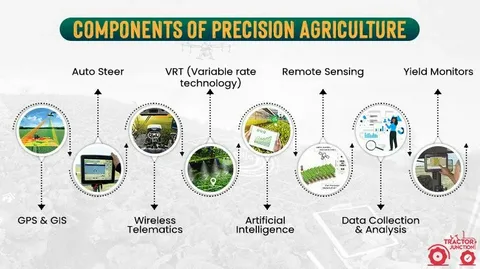
Agriculture has always been the backbone of human civilization, but modern challenges like climate change, resource scarcity, and population growth demand innovative solutions. One of the most transformative approaches in the agricultural sector today is precision agriculture: Leveraging AI, IoT, and Big Data in Agriculture. This technology-driven farming method optimizes crop production, reduces waste, and ensures sustainable practices.
What is Precision Agriculture?
Precision agriculture refers to the use of advanced technologies to monitor and manage field variability in crops. By gathering detailed data on soil conditions, weather patterns, and crop health, farmers can make informed decisions that improve efficiency and yields. The integration of Artificial Intelligence (AI), the Internet of Things (IoT), and Big Data analytics forms the backbone of this modern farming approach.
Role of AI in Precision Agriculture
Artificial Intelligence plays a crucial role in analyzing complex agricultural data. AI-powered systems can predict crop diseases, recommend optimal planting schedules, and even automate irrigation systems. For instance, machine learning algorithms can process historical data and real-time information from IoT sensors to predict the best times for fertilization or harvesting. This not only maximizes productivity but also reduces unnecessary resource use.
IoT: The Nervous System of Smart Farms
IoT devices, such as soil moisture sensors, drones, and climate monitoring stations, provide continuous data from the farm. These devices communicate with AI systems to offer precise recommendations. For example, IoT sensors can detect soil nutrient deficiencies in real-time, enabling targeted fertilization instead of blanket application, thereby saving costs and minimizing environmental impact.
Big Data Analytics for Smarter Decision-Making
Big Data enables farmers to make sense of the massive amounts of information collected from IoT devices and AI models. By analyzing patterns in weather, soil conditions, and crop growth, predictive insights can be generated. Farmers can anticipate pest infestations, forecast yields, and optimize resource allocation. This holistic approach ensures sustainability and profitability.
Benefits of Precision Agriculture
Implementing Precision Agriculture: Leveraging AI, IoT, and Big Data in Agriculture offers numerous benefits:
- Increased Productivity: Data-driven insights lead to better crop management.
- Resource Efficiency: Optimized use of water, fertilizers, and pesticides.
- Environmental Sustainability: Reduced chemical runoff and lower carbon footprint.
- Cost Reduction: Precision targeting minimizes waste and operational expenses.
Challenges and Future Prospects
Despite its potential, precision agriculture faces challenges like high initial investment, data privacy concerns, and the need for technical expertise. However, ongoing advancements in AI, IoT, and Big Data are making these solutions more accessible and scalable. The future of farming is likely to see greater automation, improved crop resilience, and more environmentally friendly practices.
Conclusion
Precision Agriculture: Leveraging AI, IoT, and Big Data in Agriculture is revolutionizing the way we cultivate crops. By combining smart technology with traditional farming knowledge, farmers can achieve higher efficiency, sustainability, and profitability. As technology continues to evolve, the adoption of precision agriculture practices will play a pivotal role in feeding a growing global population.
