



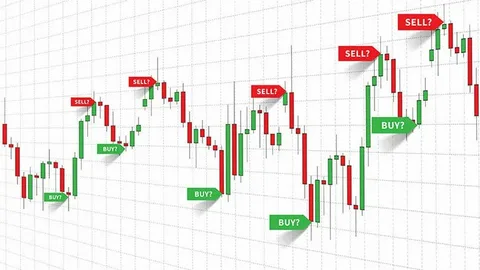
In fast-moving cryptocurrency markets, reacting late often means missing the opportunity. Prices can surge or drop within minutes, leaving little room for hesitation. This is why many traders are shifting their focus from reacting to price movements toward anticipating them using early signals.
This approach does not rely on predicting the future with certainty. Instead, it involves identifying patterns, signals, and conditions that increase the probability of a certain outcome. Over time, this shift from reaction to anticipation is becoming a defining trait of more experienced traders.
What Are Market Signals in Crypto?
Market signals are indicators or data points that suggest potential future price movements. These can come from various sources, including:
- Technical indicators on charts
- Changes in trading volume
- Funding rate shifts in derivatives markets
- On-chain transaction activity
Individually, these signals may not provide clear answers. However, when combined, they can offer valuable clues about market direction.
This growing interest is reflected in searches like “how to identify early crypto trading signals before price moves” and “best ways to use market signals in cryptocurrency trading.”
The Difference Between Lagging and Leading Indicators
Not all signals are equal. Some indicators are lagging, meaning they confirm trends after they have already started. Others are considered leading indicators, which may hint at potential changes before they occur.
For example:
- Moving averages often confirm existing trends
- Volume spikes can indicate increasing interest before a breakout
- Funding rate extremes may suggest overcrowded positions
Understanding this distinction helps traders avoid relying solely on delayed confirmations and instead look for early signs of change.
AiCoin brings together different types of signals, allowing traders to evaluate both leading and lagging indicators in one place.
Volume as an Early Warning System
Volume is one of the most widely used signals in trading, yet it is often misunderstood. Many traders focus on price first and volume second, when in reality, volume can sometimes provide earlier insight.
A sudden increase in volume may indicate:
- Growing interest in an asset
- Accumulation or distribution by larger players
- The potential start of a breakout or reversal
When volume increases without a significant price change, it can signal that something is building beneath the surface.
This explains why traders frequently search for “how to use volume to predict crypto price breakouts.”
Funding Rates and Market Sentiment
In derivatives markets, funding rates offer a glimpse into trader sentiment. When funding rates are highly positive, it suggests that long positions are dominant. When they are negative, short positions may be in control.
Extreme funding rates can sometimes act as contrarian signals. For instance:
- Overcrowded long positions may lead to a correction
- Excessive short positions could trigger a short squeeze
By monitoring these metrics, traders can better understand the balance of the market and anticipate potential shifts.
On-Chain Activity as a Hidden Signal
Unlike traditional markets, cryptocurrency provides access to on-chain data, which can reveal underlying activity before it impacts price.
Some examples include:
- Large transfers to exchanges, which may indicate selling intent
- Increased wallet accumulation, suggesting long-term confidence
- Spikes in network activity, reflecting growing usage
While these signals require careful interpretation, they can provide context that is not visible on charts alone.
Searches like “how to use on-chain signals to predict crypto market movements” highlight the increasing importance of this data.
Combining Signals for Stronger Insights
Relying on a single signal can be risky. Markets are complex, and no indicator is accurate all the time. This is why many traders focus on confluence—the alignment of multiple signals.
For example, a stronger setup might include:
- Price approaching a key resistance level
- Increasing volume supporting the move
- Positive on-chain activity indicating demand
When multiple signals point in the same direction, the probability of a successful trade may improve.
The Role of Alerts in Signal-Based Trading
Monitoring multiple signals across different assets can be time-consuming. This is where alert systems become valuable.
Instead of constantly watching the market, traders can set alerts for specific conditions, such as:
- Price reaching a key level
- Sudden changes in volume
- Funding rate thresholds
This allows traders to focus on high-probability setups rather than reacting to every movement.
Long-tail keywords like “how to set crypto trading alerts for early signals” reflect the growing reliance on this approach.
Avoiding False Signals
One of the biggest challenges in signal-based trading is distinguishing between valid signals and false ones. Markets often produce noise—movements that appear meaningful but lack follow-through.
To reduce the risk of false signals, traders often:
- Wait for confirmation from multiple indicators
- Analyze signals across different timeframes
- Avoid acting on isolated data points
Patience becomes just as important as analysis in this context.
Developing a Signal-Based Mindset
Shifting from reactive to anticipatory trading requires a change in mindset. Instead of chasing price movements, traders focus on preparation.
This includes:
- Identifying key levels in advance
- Monitoring relevant signals
- Defining clear conditions for action
By preparing ahead of time, traders can respond more effectively when opportunities arise.
Conclusion
In cryptocurrency trading, timing is everything. While reacting to price movements can sometimes be effective, anticipating them offers a significant advantage.
By understanding and combining different market signals—such as volume, funding rates, and on-chain activity—traders can gain deeper insight into market behavior. This approach does not eliminate risk, but it helps create a more structured and informed decision-making process.
As tools and data continue to evolve, signal-based trading is likely to become even more prominent. For traders, the goal is not to predict every move, but to recognize the conditions that make certain outcomes more likely—and act with clarity when those conditions appear.